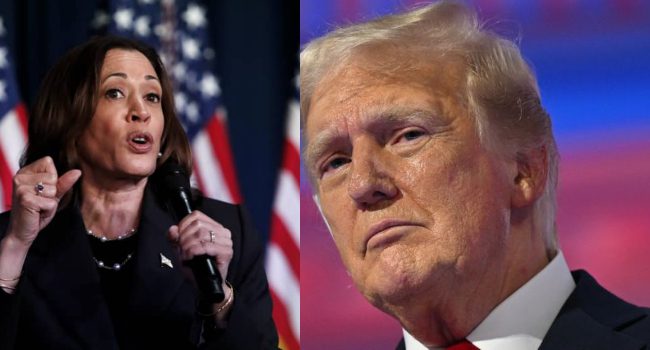

Donald Trump has recently dismissed a surprising Iowa poll that indicated Kamala Harris was in the lead within the state. He referred to the poll as a “fake poll,” attributing its creation to what he described as a “Trump hater.” This response came during an interview with NBC’s Dash Burns, where Trump expressed his disbelief regarding the accuracy of the survey.
Despite his harsh criticism of the Iowa poll, Trump had previously praised Ms. Selzer, the pollster behind it, calling her “talented” late in 2023. This contradiction highlights the former president’s tendency to selectively accept or reject polling data based on its favorability towards him.
In his defense, Trump pointed to an Emerson poll that reportedly shows him leading by 10 points. He emphasized this data during the call, insisting that the Selzer poll was misleading and not representative of the current political landscape. This claim underscores his strategy of promoting only those polls that favor his candidacy.
Trump further elaborated on his critique, stating, “That’s a fake poll done by a Trump hater who oversampled a lot of Democrats.” This assertion suggests that he believes the methodology of the poll was flawed, potentially skewing the results in favor of Harris. His comments reveal a broader narrative he often employs regarding polls that do not align with his campaign’s message.
Read also: Trump and Harris make final campaign efforts as millions cast their votes early
As the election season heats up, both Trump and Harris are making frantic efforts to mobilize support across crucial swing states. The stakes are high, and both candidates are keenly aware that every poll can significantly influence public perception and voter turnout.
Harris, in particular, faces the challenge of countering Trump’s established base while also appealing to undecided voters. The dynamics of the race are complex, with each candidate attempting to navigate the landscape of public opinion amid fluctuating poll results.
In this charged political environment, the interpretation of polling data becomes a critical tool for both campaigns. Each candidate aims to frame the narrative in a way that bolsters their position and undermines their opponent’s credibility.
Ultimately, the back-and-forth over polling reflects the intense competition leading up to the election. As Trump and Harris continue their campaigns, the implications of these polls will play a significant role in shaping strategies and rallying support.